Complimentary FREE Collagen Peptide Booster with all purchases over £130 + FREE Makeup Remover 30ml
22.04.2026
2 min read
SPF: What It Means and Why It Matters

SPF is a term you see on every sunscreen bottle, but what does SPF mean exactly? In this practical guide, we explore the full SPF meaning, what the different numbers represent (like SPF 30 or SPF 50), and how to select the best sun protection based on your skin type and lifestyle.
Using proper SPF daily is essential for preventing photoageing, sunburn, dark spots, and other types of sun-related skin damage.
What Is SPF and How Does It Work?
SPF stands for "Sun Protection Factor." This number measures how long your skin can be exposed to the sun without burning compared to unprotected skin. For example, with SPF 30, your skin is protected 30 times longer than if you weren’t wearing sunscreen. It’s a simple but vital indication of sun safety.
However, SPF only measures protection against UVB rays - the ultraviolet rays that cause sunburn. It does not indicate protection against UVA rays, which penetrate deeper into the skin and are responsible for premature ageing and pigmentation. To ensure full protection, always choose a sunscreen labelled "broad spectrum," meaning that it protects against both UVA and UVB.
SPF is essential not just for sunny beach days but also for everyday exposure, as UV radiation is present even on cloudy days or through windows.
Differences Between SPF 15, 30 and 50
To grasp the full SPF meaning, it helps to know the difference between common SPF levels:
SPF 15 filters about 93% of UVB rays. It’s suitable for very short periods outdoors or when UV levels are low.
SPF 30 blocks around 97% of UVB rays. It is the most commonly recommended SPF for daily wear and suitable for most skin types.
SPF 50 provides about 98% UVB protection. It’s ideal for sensitive, fair, or hyperpigmentation-prone skin, and for prolonged sun exposure.
While SPF 50 offers just 1% more protection than SPF 30, that small margin can make a difference for vulnerable skin types or during long periods of exposure.
What SPF Level Do I Need for My Skin Type?
When thinking about SPF meaning, it’s important to consider your skin tone and lifestyle:
Fair, light, or sensitive skin: This skin type burns easily and is prone to damage and pigmentation. SPF 50 or higher is essential, particularly in summer, at high altitudes, or tropical climates.
Medium or olive skin: Slightly more tolerant of the sun but still vulnerable to long-term damage. Use SPF 30–50 depending on exposure levels.
Dark skin: Contains more melanin which offers some natural UVB protection but is still at risk of UV damage and hyperpigmentation. SPF 30 broad-spectrum is highly recommended.
It’s not just your skin tone that matters - think about your location, time of day, and activity. For outdoor sports, beach days, or skiing, choose SPF 50 with water resistance.
How to Apply Sunscreen Correctly
Recommended Amount
To get the protection advertised on the label, you need to use enough product:
Face and neck: Use about half a teaspoon.
Full body: Apply approximately 30ml (1 ounce), the equivalent of a shot glass.
Many people apply less than half the recommended amount, significantly reducing the effectiveness.
Frequency of Reapplication
Reapply sunscreen every two hours, or more frequently if swimming, sweating, or towel-drying. This ensures continuous protection and prevents sunburn.
Apply sunscreen 15-20 minutes before sun exposure to allow it to form a protective layer.
Daily Sun Protection: Beyond Summer
Sun protection isn’t only for summer. UVA rays are present all year round, and they penetrate clouds and glass. This means your skin is exposed to damaging rays while driving, working near windows, or even during overcast days.
Including a high-quality SPF in your skincare routine helps prevent the early signs of ageing such as wrinkles, fine lines, loss of elasticity, and uneven tone. It’s the most effective and affordable anti-ageing step you can take.
Timexpert Sun: Sun Protection with Anti-Ageing Treatment
Timexpert Sun is our advanced line that combines broad-spectrum sun protection with powerful anti-ageing skincare benefits:
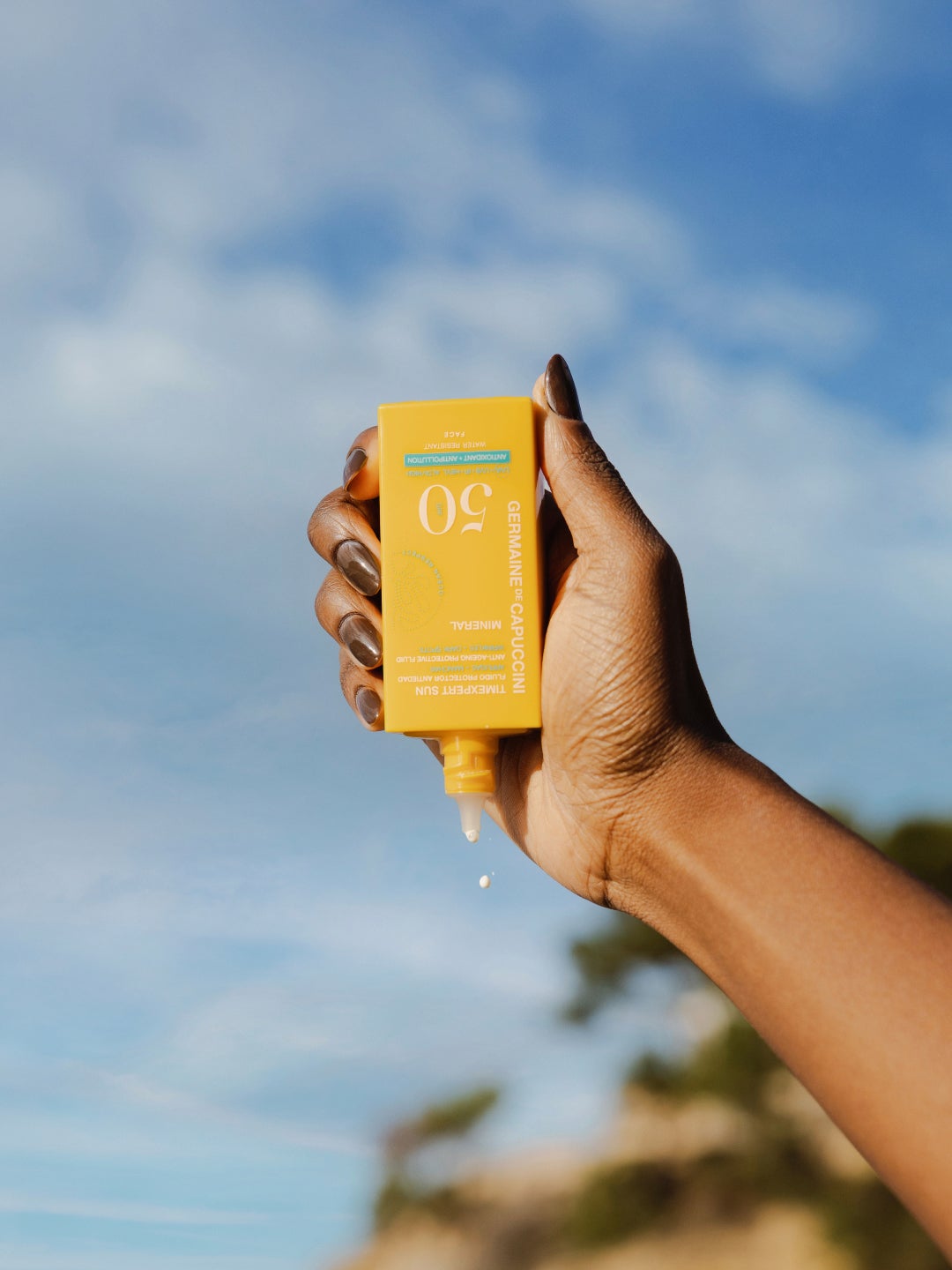
Anti-Aging Sunscreen Fluid SPF50: Lightweight texture perfect for daily use on the face. Absorbs quickly, leaves no residue, and works well under makeup.
Protective Lotion SPF50: Full-body protection with a fluid, comfortable formula great for beach, sports, or sensitive skin.
Anti-Aging Protective Cream SPF50: Combines UVA/UVB filters with anti-ageing ingredients to prevent wrinkles and firm the skin.
Invisible Protector Stick SPF50: Targeted stick for delicate areas like lips, eyelids, or sun spots - ideal for top-ups throughout the day.
Easy Fresh SPF50: Refreshing facial spray that reactivates protection without disturbing makeup great for reapplication.
Oil Bronze SPF20: A low-SPF oil that enhances tanning while offering light UV protection with a silky, non-greasy finish.
Blue Protective Oil Water SPF30: Biphasic oil formula that hydrates, protects, and adds a radiant glow.
Each product is dermatologically tested and developed with high-performance formulas designed to protect, hydrate, and beautify the skin.
Frequently Asked Questions about SPF Meaning
What level of SPF is best?
SPF 30 is suitable for daily wear in urban environments. SPF 50 is recommended for long exposure, beach, sports, and fair or sensitive skin.
What SPF is recommended for the face?
SPF 50 with a lightweight, non-comedogenic formula like Anti-Aging Sunscreen Fluid is ideal for facial use.
Which SPF should I use?
A minimum SPF 30 for everyday use and SPF 50 for high-exposure activities. Always check for broad-spectrum protection.