How to Treat Sunburn and Minimise Post-Sun Dark Spots

Falling asleep on the beach, losing track of time outdoors or forgetting to reapply sunscreen – the result is always the same: red, hot, tight skin, a clear sign that UV rays have damaged the skin.
Treating sunburn promptly can make the difference between a quick recovery and dealing with stubborn dark spots that may linger for weeks or even months.
In this guide, you'll discover what to do when you get sunburnt, how to soothe your skin in the first few hours, and which cosmetic ingredients can help reduce sun-induced pigmentation. We’ll also answer some of the most common questions about recovery times and when it’s advisable to seek medical advice.
What Happens to the Skin When It Gets Sunburnt?
Sunburn is much more than temporary redness. When exposure to UVA and UVB rays exceeds the skin’s natural defence capacity, an inflammatory response is triggered across multiple layers of the skin.
Depending on the intensity of exposure and your skin phototype, the effects can range from mild erythema to blistering and severe peeling.
Over time, inflammation stimulates melanocytes, the cells responsible for melanin production. This protective mechanism can lead to the appearance of dark spots after sunburn, known as post-inflammatory hyperpigmentation, which may persist for several months if not properly treated.
How to Soothe Sunburn: Essential Care During the First Hours
The first 24–48 hours are crucial for limiting damage and supporting skin recovery.
Apply an After-Sun Product Immediately
A dedicated after-sun gel or lotion helps reduce heat sensations and provides soothing ingredients that restore comfort to the skin.
Timexpert Sun Icy Pleasure After-Sun combines refreshing actives with thermal water to calm the skin and support the recovery of the skin barrier.
Cool the Area with Fresh Water
Applying cool (not ice-cold) water for 10–15 minutes can help relieve discomfort without causing additional stress to already inflamed skin.
Direct application of ice is not recommended, as it may worsen tissue damage.
Maintain Good Hydration
Sunburn can contribute to fluid loss. Drinking extra water in the following days helps maintain hydration from within and supports the skin’s natural recovery processes.
Avoid Direct Sun Exposure
Sunburnt skin is extremely sensitive. Wearing protective clothing and staying in the shade for several days helps prevent further damage and promotes healing.
Avoid Exfoliating Inflamed Skin
During the acute phase, both physical and chemical exfoliants should be avoided, as they may worsen inflammation and delay skin repair.
Do Sunburn Dark Spots Fade?
In most cases, yes. However, the time required depends on the depth of the damage, skin phototype and the treatment used.
Milder post-inflammatory hyperpigmentation often fades naturally within 3–6 months, particularly when further unprotected sun exposure is avoided.
Deeper pigmentation or white patches caused by sunburn (hypopigmentation) can be more difficult to treat and may require professional dermatological care.
The single most important factor in fading pigmentation is daily sun protection. Without adequate SPF, melanocytes continue to receive UV stimulation, which can reactivate melanin production even after the sunburn itself has healed.
How to Reduce Sunburn Pigmentation: The Most Effective Cosmetic Ingredients
Once the inflammatory phase has passed and active redness has subsided, targeted cosmetic treatments can be introduced.
Vitamin C
Vitamin C helps inhibit tyrosinase, the enzyme involved in melanin production, while providing powerful antioxidant protection against oxidative stress.
Stabilised Vitamin C formulations are among the most effective ingredients for treating sun-induced pigmentation and post-inflammatory dark spots.
Niacinamide
Niacinamide helps reduce the transfer of melanosomes to skin cells, limiting visible pigment accumulation on the skin’s surface.
It is well tolerated even by sensitive skin and can be used alongside Vitamin C for enhanced brightening benefits.
Tranexamic Acid
Tranexamic acid targets multiple pathways involved in melanin synthesis and is considered one of the most effective ingredients for treating post-inflammatory hyperpigmentation and melasma.
AHAs (Glycolic Acid and Lactic Acid)
Alpha hydroxy acids encourage skin renewal and help gradually remove surface layers containing higher concentrations of pigment.
They should always be paired with strict sun protection, as UV exposure can worsen hyperpigmentation.
Timexpert Sun by Germaine de Capuccini: Sun Protection
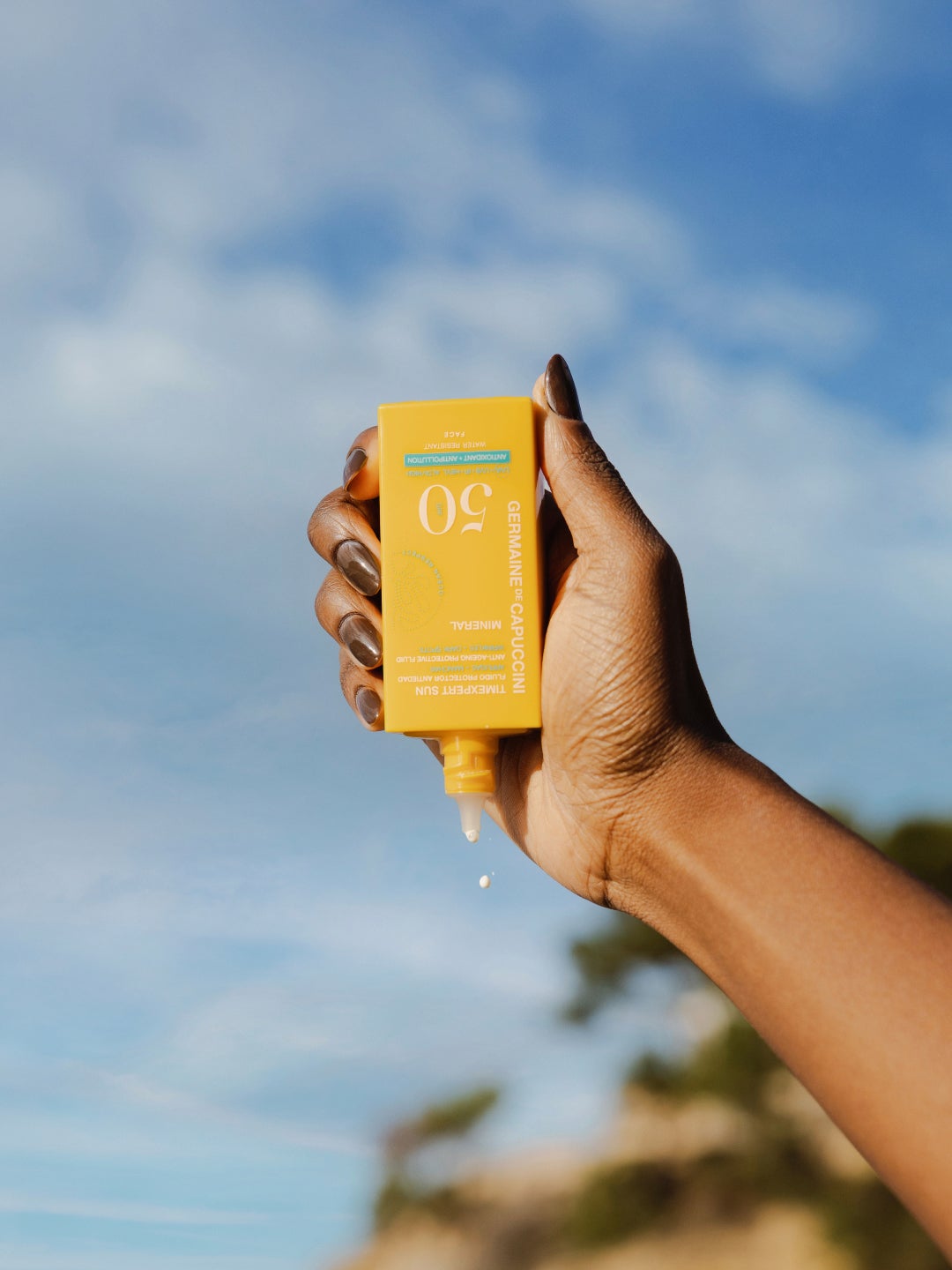
The Timexpert Sun range by Germaine de Capuccini supports the skin both immediately after sun exposure and in preventing the formation of new dark spots, thanks to its broad-spectrum SPF 50 sun protection products.
For antioxidant protection and luminosity, the Timexpert Radiance C+ range provides treatments formulated with stabilised Vitamin C for both face and body.
The ideal routine involves soothing the skin with an after-sun product during the acute phase, protecting it daily with SPF 50, and subsequently introducing depigmenting actives into your evening skincare routine.
When Should You See a Doctor?
Most cases of sunburn can be managed at home, but medical advice is recommended if you experience:
Extensive blistering or signs of infection.
High fever, chills or dizziness associated with the sunburn.
Persistent white patches that do not improve after 6–12 months.
Lesions that fail to heal, recurring scabs or noticeable changes in skin texture.
In these cases, a dermatologist may recommend treatments such as topical retinoids, hydroquinone or advanced dermatological procedures.
Frequently Asked Questions
DO SUNBURN DARK SPOTS FADE ON THEIR OWN?
Milder forms of post-inflammatory hyperpigmentation often fade naturally within 3–6 months, provided the skin is consistently protected from the sun.
HOW LONG DOES IT TAKE FOR SUNBURN PIGMENTATION TO FADE?
With appropriate treatment and consistent sun protection, superficial pigmentation may show visible improvement within 8–12 weeks. More persistent pigmentation can take 6 months or longer. Consistency and avoiding further unprotected sun exposure are key to achieving the best results.
DOES ALOE VERA HELP FADE DARK SPOTS?
Aloe vera is valued for its soothing and anti-inflammatory properties during the acute phase of sunburn. However, its effect on established pigmentation is limited. For visible dark spots, targeted ingredients such as Vitamin C, niacinamide and tranexamic acid are significantly more effective.
HOW CAN WHITE PATCHES CAUSED BY SUNBURN BE TREATED?
White patches result from a reduction or loss of melanocytes in the affected area. A dermatological assessment is recommended to determine the most appropriate treatment.
HOW CAN YOU TREAT OLD SUNBURN MARKS?
Reducing facial wrinkles requires treatments with active ingredients that stimulate collagen production and improve skin elasticity. The Timexpert Wrink·Less line combines Pro-Collagen technology with a neuromodulating effect to visibly smooth expression lines, plump wrinkles, and enhance facial firmness progressively